For customers in Crewe, roof replacement can be particularly relevant for renewing an ageing tiled or slate roof as part of routine property improvement or a larger renovation.
Apex Roofing provides professional roof replacement in Crewe, including complete re-roofing, new slate roofs and new tiled roofs for homeowners and property owners.
For customers in Crewe, roof replacement can be particularly relevant for renewing an ageing tiled or slate roof as part of routine property improvement or a larger renovation.
Crewe has a large stock of terraced and semi-detached housing built as the town grew around the railway works, and the right specification follows from the roof rather than from a price list. If you are unsure whether the existing roof needs further repair or complete replacement, the first step is to assess it and establish the extent of the work.
The point at which a re-roof becomes the better answer is rarely dramatic. It is normally the third or fourth repair in as many years, on a roof where the covering has simply reached the end of its service life and is failing in one place after another.
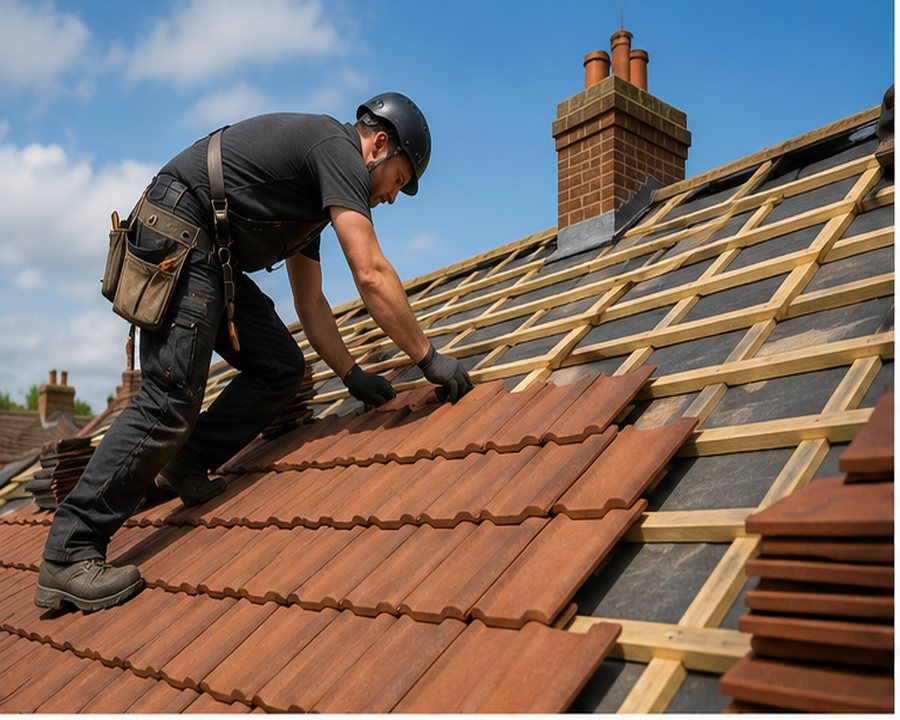
Tiled roofing is the most common covering on Crewe's residential stock. Replacement tiles are available in profiles close enough to most existing roofs that a new roof reads as the same house rather than an obvious change.
Slate is used on parts of Crewe's older stock and remains a durable pitched-roof covering. Whether it is the right choice for a particular roof depends on the pitch, the structure and the existing covering.
One slipped tile is a repair. Slipped tiles in three different places over two winters is a covering telling you something, and that is the point at which replacement is worth pricing alongside another repair.
The honest comparison is not repair price against replacement price. It is repair price multiplied by how many more repairs the roof will need, against replacement once. On a covering that is genuinely worn out, that comparison usually favours replacement.
Apex Roofing can assess the individual property and quote for the work actually required, rather than treating every roof as the same job.
The planning question is simpler than it is usually made to sound. Section 55 of the Town and Country Planning Act 1990 says work that does not materially affect a building's external appearance is not development. Slate replaced with slate, or tile with matching tile, does not change the appearance — so there is nothing to apply for.
A change of covering is the exception. If the new roof would look materially different from the old one, the section 55 exemption stops applying and permission may be needed. That is a five-minute conversation with Cheshire East Council and it is considerably cheaper before the order goes in.
One thing does genuinely change the position, and it is not conservation area status on its own. Designation does not by itself remove roof alteration rights — what removes them is a specific Article 4 direction. Crewe is not covered by any of Cheshire East's Article 4 directions, which apply to eight conservation areas elsewhere in the borough. Which means the ordinary position applies to most Crewe properties.
Listed status changes everything. Re-roofing a listed building affects its character, so listed building consent is required under section 7 of the Planning (Listed Buildings and Conservation Areas) Act 1990 — in addition to, not instead of, anything else. Cheshire East Council deals with it, and it is worth starting early because it is not a formality.
The regulation that actually bites on a re-roof is not a planning one. It is regulation 23 of the Building Regulations 2010, which requires a renewed thermal element to be brought up to current insulation standards. Replacing the whole covering renews the whole element, so there is no argument about whether it applies.
Approved Document L Volume 1 puts the figure at 0.16 W/(m²K) for a renovated roof on an existing home. It is worth seeing that number on paper, because it is the difference between a re-cover and a compliant re-roof.
Both of the escape routes in the guidance are worth knowing. Head room is one: if the full thickness would lose you the room, a lesser standard applies provided the insulation fills the rafter depth. Payback is the other: an upgrade that will not repay itself inside fifteen years is reduced to one that will. Neither permits leaving the roof less insulated than before.
There are two ways the work gets signed off. Either it is notified to building control — the local authority or a Registered Building Control Approver — or the roofer is registered with a competent person scheme (CompetentRoofer, run by the National Federation of Roofing Contractors, or NAPIT) and self-certifies. Both are legitimate. What matters is that one of them happens, because the certificate is what a buyer's solicitor asks for years later.
Older and protected buildings get some latitude. Approved Document L accepts that listed buildings, buildings in conservation areas and scheduled monuments need not comply fully where doing so would unacceptably alter character or appearance — though that is not a blanket exemption, and compliance is still expected where it would not. It also warns against upgrades that trap moisture in vapour-permeable construction, which matters on older stone and lime-mortared property. Cheshire East Council's conservation officer and building control settle it between them.
Slate and tile can both provide an attractive pitched-roof finish. The right choice depends on the existing property, roof design, desired appearance and project requirements — and on what the roof structure was built to carry. Both sit within the same roof replacement service.
Read the full slate vs tile comparison →
A complete new roof can form an important part of renovating an older property. Replacing an ageing covering alongside other exterior work also transforms the appearance of the building — and it is far easier done before scaffolding comes down than after.
Five guides written for Crewe homeowners on what a new roof costs and how to decide what you actually need.
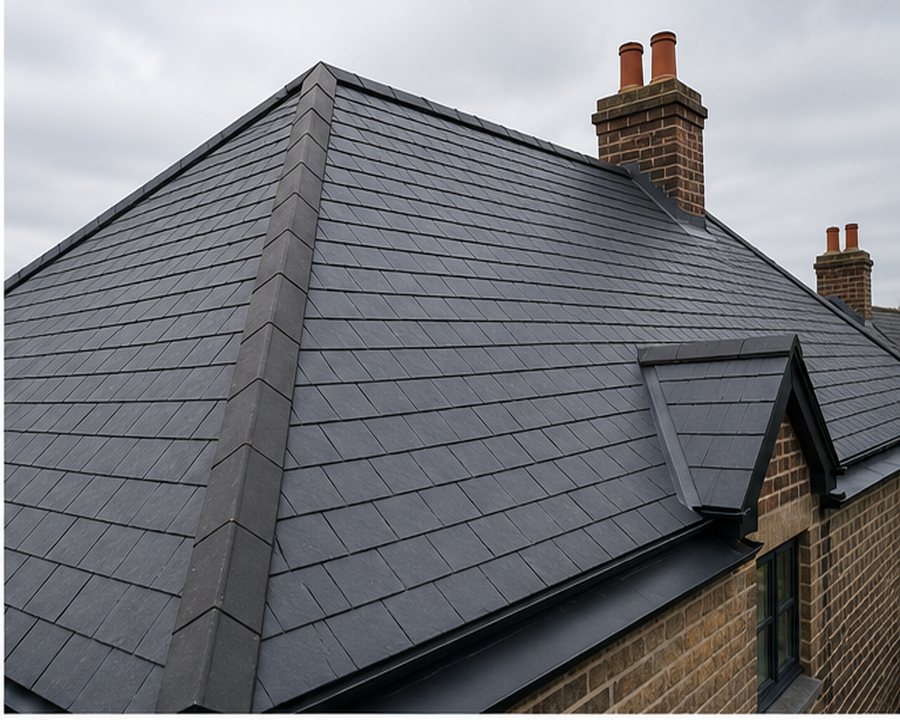
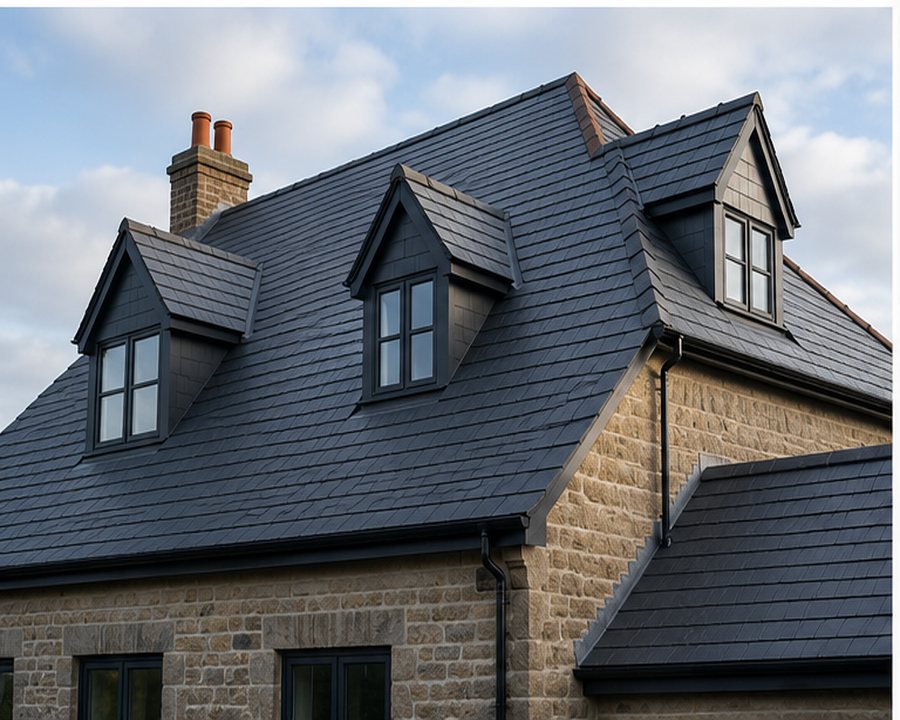
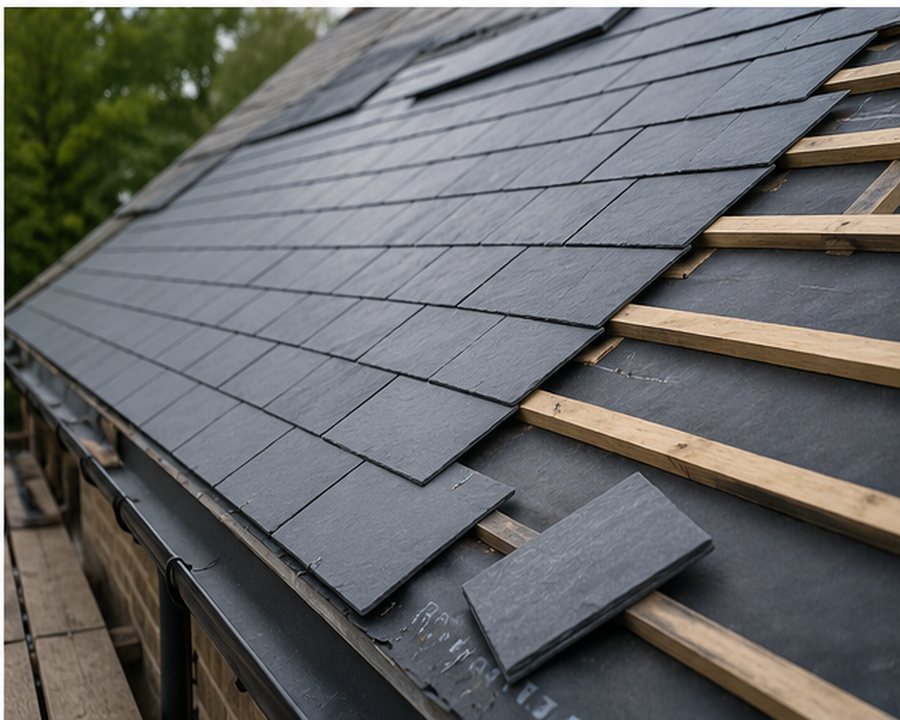
Slate and tiled roof replacement carried out by Apex Roofing across Cheshire.
The price depends on roof size and design, the existing covering, materials selected, access and the amount of work required. Contact Apex Roofing for a quotation.
Yes. Complete tiled roof replacement is included within the re-roofing service.
Yes. Slate roof replacement and new slate roofing are available for suitable projects.
The correct approach depends on the extent of the problem and overall roof condition. The roof should be assessed before deciding on the appropriate work.
Yes. Roof replacement can form part of a wider property renovation project.
Yes. Call 07377 461095 to discuss the project.
Usually not. A like-for-like re-roof does not materially affect the external appearance, so under section 55 of the Town and Country Planning Act 1990 it is not development at all. Changing to a visibly different material may be, and an Article 4 direction or a listed building changes the position — Cheshire East Council can confirm.
Yes. A complete re-roof renews a thermal element, which under regulation 23 of the Building Regulations 2010 triggers a duty to bring the roof up to current insulation standards — a U-value of 0.16 W/(m²K) for an existing dwelling. The work is either notified to building control or self-certified by a roofer registered with a competent person scheme.
Apex Roofing covers Cheshire and the surrounding area for complete roof replacement, new slate and tiled roofs and re-roofing.
Apex Roofing Cheshire · 105 Fence House, Fence Avenue, Macclesfield SK10 1LM
Tell us about the property and the roof, and we will come back to you — usually the same day.
Prefer to talk? Call 07377 461095 · WhatsApp +44 7465 861265 · Email apexroofing14@gmail.com