
For customers in St Helens, roof replacement can be particularly relevant for giving an older property a fresh roofing system when the existing covering requires extensive attention.
Apex Roofing provides professional roof replacement in St Helens, including complete re-roofing, new slate roofs and new tiled roofs for homeowners and property owners.
For customers in St Helens, roof replacement can be particularly relevant for giving an older property a fresh roofing system when the existing covering requires extensive attention.
St Helens has substantial Victorian and Edwardian housing from the town's industrial expansion, and the right specification follows from the roof rather than from a price list. If you are unsure whether the existing roof needs further repair or complete replacement, the first step is to assess it and establish the extent of the work.
A complete re-roof is worth considering once problems appear across more than one slope. On the older housing common in St Helens, coverings and their fixings tend to reach the end of their life at roughly the same time across the whole roof.
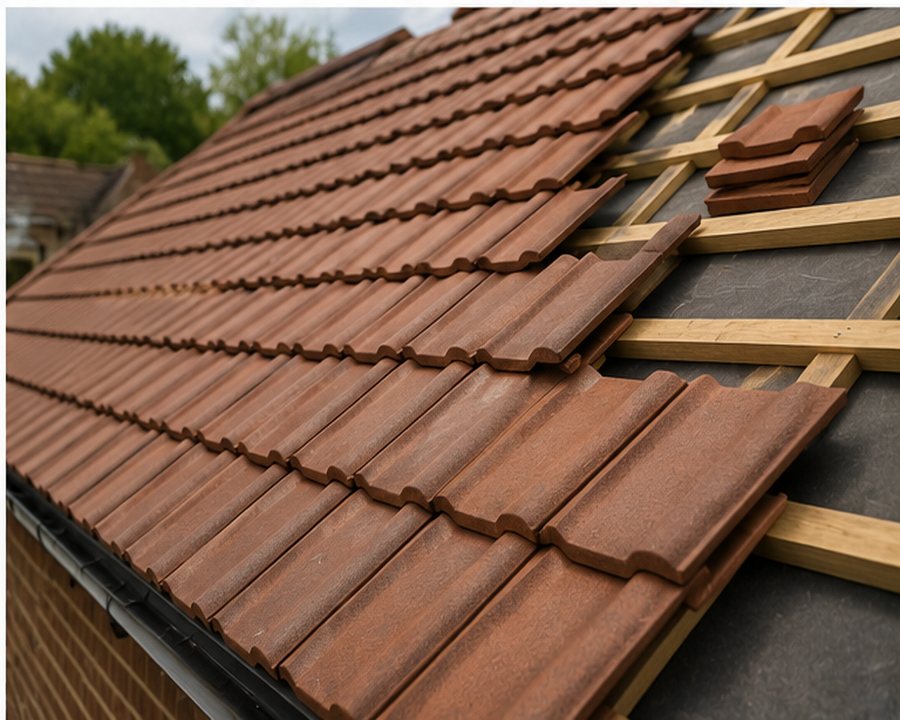
Tiled roofing is widely used across St Helens and offers a broad choice of profiles. On older housing, the existing covering and the roof structure both inform which tile is appropriate.
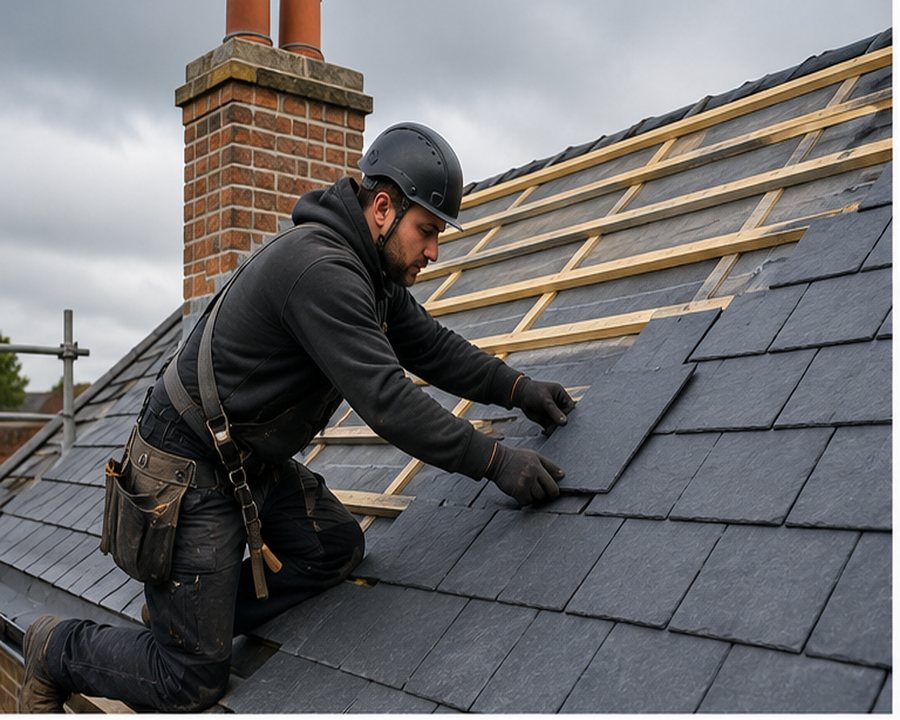
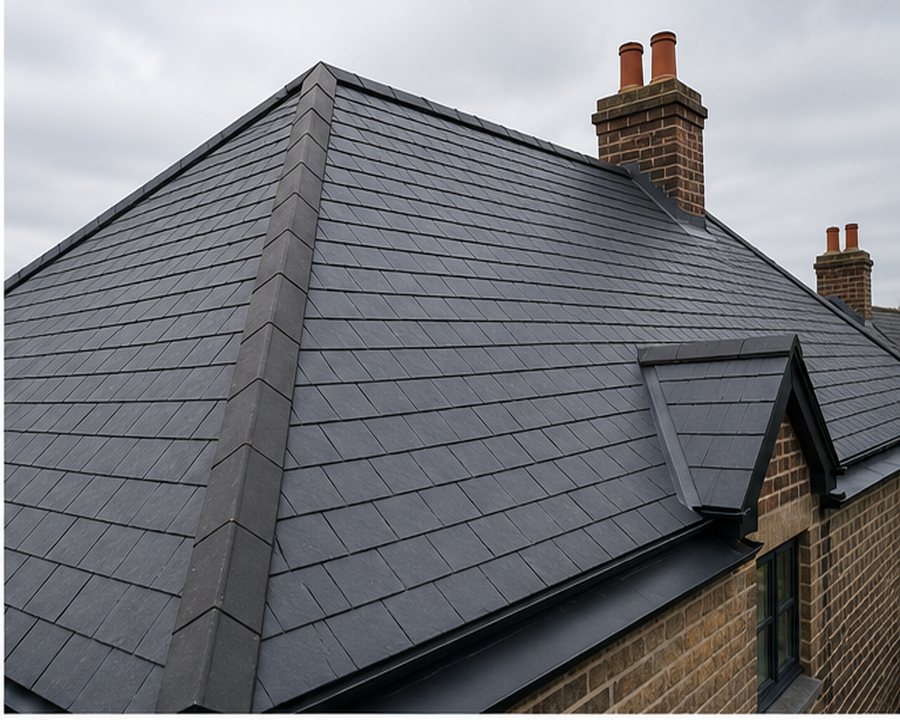
Slate was widely used on St Helens' Victorian and Edwardian housing and remains appropriate on much of it. A slate roof replaced in slate keeps both the appearance and the structural loading as designed.
The signal is repetition. A roof that needs something doing every year or two, in a different place each time, has usually reached the point where a re-roof is the more economical route.
Isolated damage on a sound roof is a repair job. Widespread deterioration is not, and continuing to repair it is a way of spending replacement money slowly without ever getting a new roof.
Apex Roofing can assess the individual property and quote for the work actually required, rather than treating every roof as the same job.
Planning permission is the first thing people ask about and the least likely to be needed. A re-roof that keeps the same appearance does not materially affect the exterior, and under section 55 of the Town and Country Planning Act 1990 that means it is not development — so no application arises.
Where it becomes less certain is a change of appearance — natural slate replaced with concrete tile, say, or a noticeably different colour or profile. That may materially affect the external appearance, in which case it is development and needs looking at. Worth a call to St Helens Borough Council before materials are ordered rather than after they are on the roof.
One thing does genuinely change the position, and it is not conservation area status on its own. Designation does not by itself remove roof alteration rights — what removes them is a specific Article 4 direction. St Helens Borough Council's Article 4(2) guidance expressly lists “any alterations to a roof or chimney” among the works requiring permission in the conservation areas it covers. In those areas, roof work that would otherwise be unrestricted does require an application to St Helens Borough Council.
Listed status changes everything. Re-roofing a listed building affects its character, so listed building consent is required under section 7 of the Planning (Listed Buildings and Conservation Areas) Act 1990 — in addition to, not instead of, anything else. St Helens Borough Council deals with it, and it is worth starting early because it is not a formality.
Building control, not planning, is what a re-roof actually engages. Regulation 23 of the Building Regulations 2010 attaches an insulation upgrade duty to the renewal of a thermal element — and a roof is one. Replacing the covering across the whole roof renews it in full.
The number to know is 0.16 W/(m²K). That is the standard Approved Document L Volume 1 sets for a renovated roof on an existing dwelling, and meeting it usually means insulation work forming part of the re-roof rather than a separate job later.
Two sensible reliefs are written into the guidance. If meeting the standard would eat into head room, a lesser standard can be appropriate provided the insulation fills the rafter depth and reaches the lowest practicable value. And if the upgrade would not pay for itself within fifteen years, the requirement is to improve to the best value that does — generally no worse than 0.7 W/(m²K), and never worse than the roof was before.
Ask any roofer quoting for a full re-roof how the work will be certified. The answer should be either “we notify building control” or “we are registered with CompetentRoofer / NAPIT and self-certify”. Both are proper routes. The certificate matters later, when the house is sold and a solicitor wants evidence the work was compliant.
Older and protected buildings get some latitude. Approved Document L accepts that listed buildings, buildings in conservation areas and scheduled monuments need not comply fully where doing so would unacceptably alter character or appearance — though that is not a blanket exemption, and compliance is still expected where it would not. It also warns against upgrades that trap moisture in vapour-permeable construction, which matters on older stone and lime-mortared property. St Helens Borough Council's conservation officer and building control settle it between them.
Slate and tile can both provide an attractive pitched-roof finish. The right choice depends on the existing property, roof design, desired appearance and project requirements — and on what the roof structure was built to carry. Both sit within the same roof replacement service.
Read the full slate vs tile comparison →
A complete new roof can form an important part of renovating an older property. Replacing an ageing covering alongside other exterior work also transforms the appearance of the building — and it is far easier done before scaffolding comes down than after.
Five guides written for St Helens homeowners on what a new roof costs and how to decide what you actually need.
Slate and tiled roof replacement carried out by Apex Roofing across Cheshire.
The price depends on roof size and design, the existing covering, materials selected, access and the amount of work required. Contact Apex Roofing for a quotation.
Yes. Complete tiled roof replacement is included within the re-roofing service.
Yes. Slate roof replacement and new slate roofing are available for suitable projects.
The correct approach depends on the extent of the problem and overall roof condition. The roof should be assessed before deciding on the appropriate work.
Yes. Roof replacement can form part of a wider property renovation project.
Yes. Call 07377 461095 to discuss the project.
Usually not. A like-for-like re-roof does not materially affect the external appearance, so under section 55 of the Town and Country Planning Act 1990 it is not development at all. Changing to a visibly different material may be, and an Article 4 direction or a listed building changes the position — St Helens Borough Council can confirm.
Yes. A complete re-roof renews a thermal element, which under regulation 23 of the Building Regulations 2010 triggers a duty to bring the roof up to current insulation standards — a U-value of 0.16 W/(m²K) for an existing dwelling. The work is either notified to building control or self-certified by a roofer registered with a competent person scheme.
Apex Roofing covers Cheshire and the surrounding area for complete roof replacement, new slate and tiled roofs and re-roofing.
Apex Roofing Cheshire · 105 Fence House, Fence Avenue, Macclesfield SK10 1LM
Tell us about the property and the roof, and we will come back to you — usually the same day.
Prefer to talk? Call 07377 461095 · WhatsApp +44 7465 861265 · Email apexroofing14@gmail.com