
For customers in Runcorn, roof replacement can be particularly relevant for replacing ageing pitched roofing where continuing patch repairs is no longer the preferred option.
Apex Roofing provides professional roof replacement in Runcorn, including complete re-roofing, new slate roofs and new tiled roofs for homeowners and property owners.
For customers in Runcorn, roof replacement can be particularly relevant for replacing ageing pitched roofing where continuing patch repairs is no longer the preferred option.
Runcorn has older housing around the original town alongside a large amount of development from the new town designated in 1964, and the right specification follows from the roof rather than from a price list. If you are unsure whether the existing roof needs further repair or complete replacement, the first step is to assess it and establish the extent of the work.
Re-roofing is the alternative to an open-ended run of repairs. Where a covering has aged to the point that fixings and laps are failing generally rather than locally, replacing the lot is usually both cheaper and less disruptive over five years.
Tiled roofing covers a large proportion of Runcorn's housing, including much of the post-1964 stock. Matching profile and colour to the surrounding properties is straightforward with modern ranges.
Slate suits Runcorn's older housing, particularly around the original town. Natural slate, fibre cement and reclaimed slate differ considerably in cost and expected life, and all three are worth discussing.
Replacement is worth considering when the covering is ageing generally rather than failing in one spot. Repeated repairs across different parts of a roof is the clearest signal.
If the problem is in one place and the rest of the roof is performing, repair. If the covering is failing generally, replacement is usually cheaper across five years than the repairs that would otherwise be needed.
Apex Roofing can assess the individual property and quote for the work actually required, rather than treating every roof as the same job.
It is worth knowing why a straightforward re-roof needs no permission, because the usual explanation is wrong. It is not that permitted development covers it. It is that under section 55 of the Town and Country Planning Act 1990 a like-for-like re-covering is not development in the first place, which is a stronger position than relying on a right that an authority can remove.
The one to watch is a material change of appearance. Slate to concrete tile is the obvious example, but so is a substantially different colour or profile. Where that is the plan, confirm the position with Halton Borough Council first — it costs nothing and it removes the only real planning risk in a re-roof.
Article 4 directions are the thing to check, rather than conservation area status. A conservation area on its own does not remove the right to alter a roof; a direction made under Article 4 of the 2015 Order does exactly that. Halton Borough Council maintains the conservation areas covering Runcorn. Whether one covers a particular street is a question for Halton Borough Council, and it is one free phone call before you commit to anything.
If the property is listed, none of the above applies in the same way. Section 7 of the Planning (Listed Buildings and Conservation Areas) Act 1990 requires consent for alterations affecting a listed building's character, and a re-roof almost always does. It is a separate consent from planning and from building control, it is obtained from Halton Borough Council, and going ahead without it is a criminal matter.
Here is the part most quotations leave out. A roof is a thermal element, and regulation 23 of the Building Regulations 2010 says that renewing one brings a duty to upgrade its insulation to today's standard. A full re-roof is a complete renewal, so the duty is engaged every time.
For an existing dwelling, Approved Document L Volume 1 sets the target at a U-value of 0.16 W/(m²K) for a renovated roof. That normally means additional insulation as part of the job, and it belongs as a real line on the quotation rather than as an optional extra.
There is room for judgement in the standard, which a roofer who has read it will know. Head room constraints allow a lesser value provided the rafter depth is filled; a payback period beyond fifteen years does the same. The floor in both cases is generally 0.7 W/(m²K), and never worse than the existing roof.
Sign-off happens one of two ways: a notification to building control, or self-certification by a roofer registered with a competent person scheme — CompetentRoofer or NAPIT. Either is fine. Neither happening is the problem, and it usually surfaces at the point of sale when a solicitor asks for the certificate.
On a period property the standard flexes rather than disappears. Where full compliance would unacceptably alter the character of a listed building, a building in a conservation area or a scheduled monument, Approved Document L accepts less — but only to that extent. It also cautions against insulation that traps moisture in older breathable construction, which is a real risk on stone and lime mortar. Ask Halton Borough Council rather than assuming either way.
Slate and tile can both provide an attractive pitched-roof finish. The right choice depends on the existing property, roof design, desired appearance and project requirements — and on what the roof structure was built to carry. Both sit within the same roof replacement service.
Read the full slate vs tile comparison →
A complete new roof can form an important part of renovating an older property. Replacing an ageing covering alongside other exterior work also transforms the appearance of the building — and it is far easier done before scaffolding comes down than after.
Five guides written for Runcorn homeowners on what a new roof costs and how to decide what you actually need.
Slate and tiled roof replacement carried out by Apex Roofing across Cheshire.
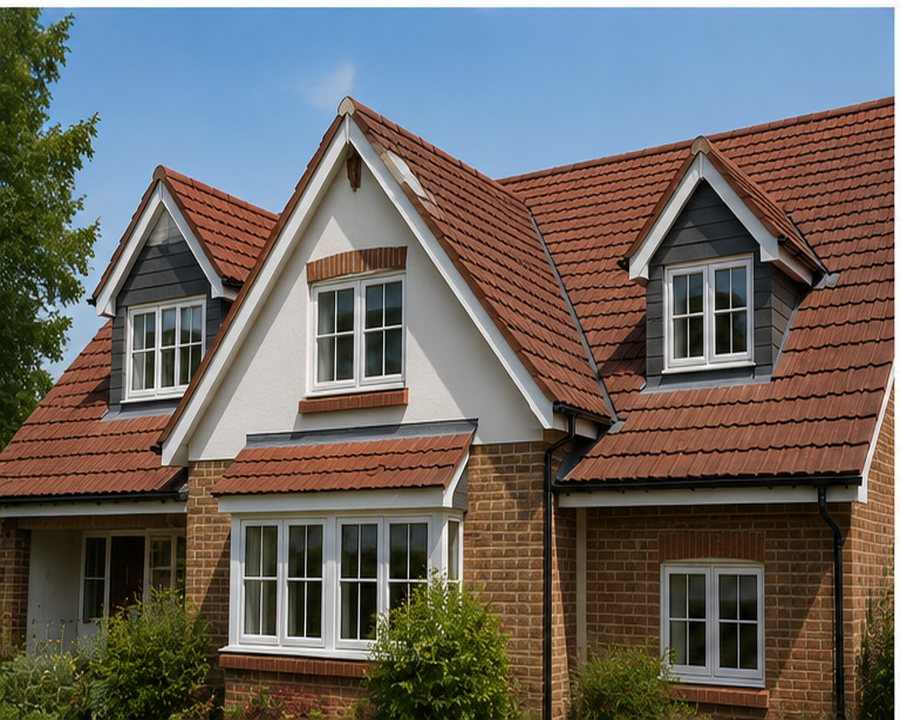
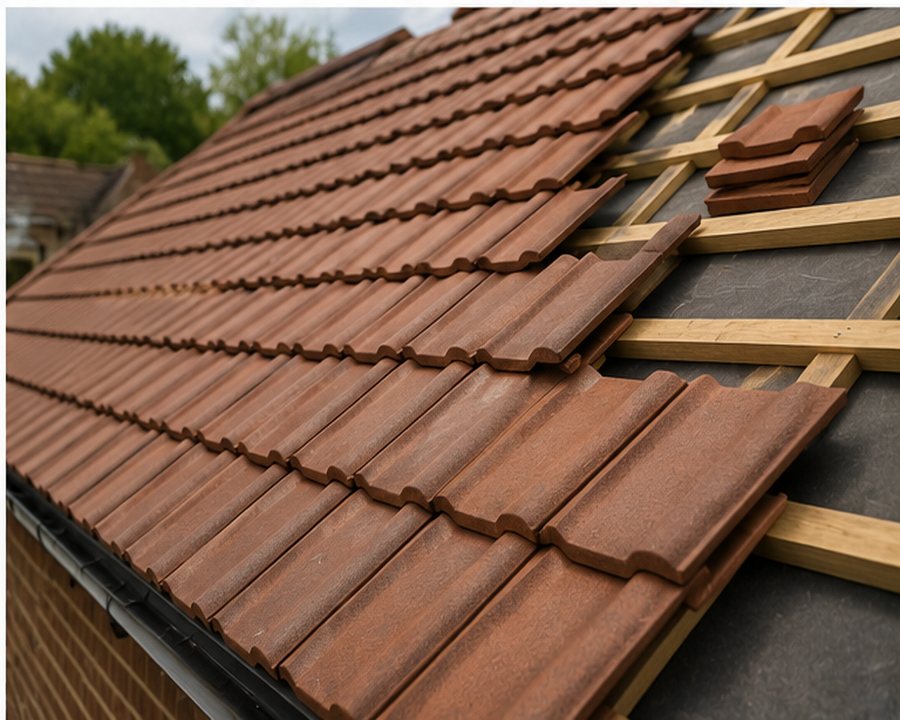
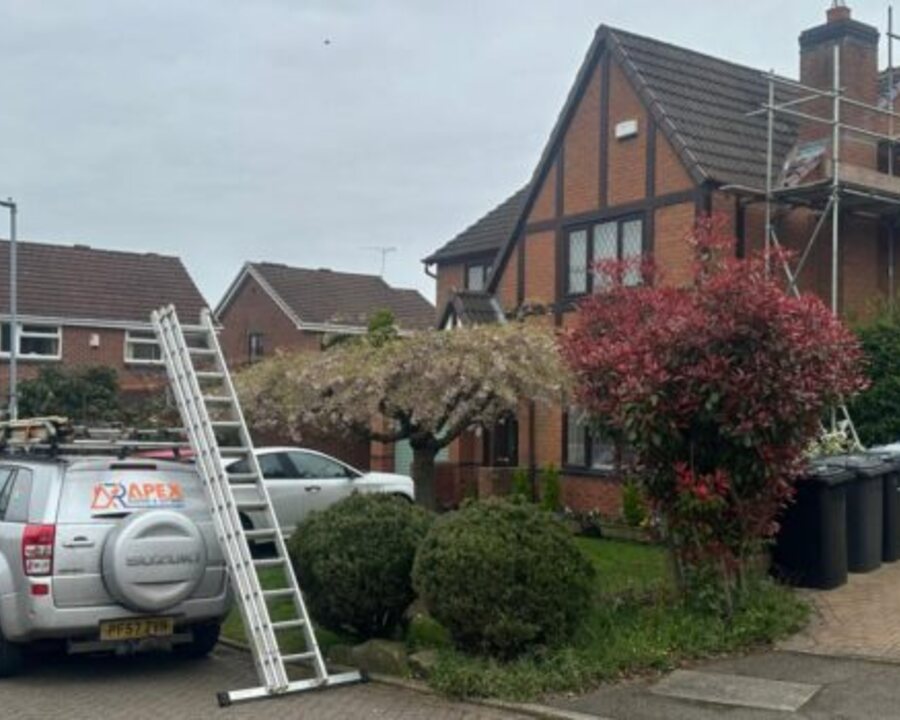
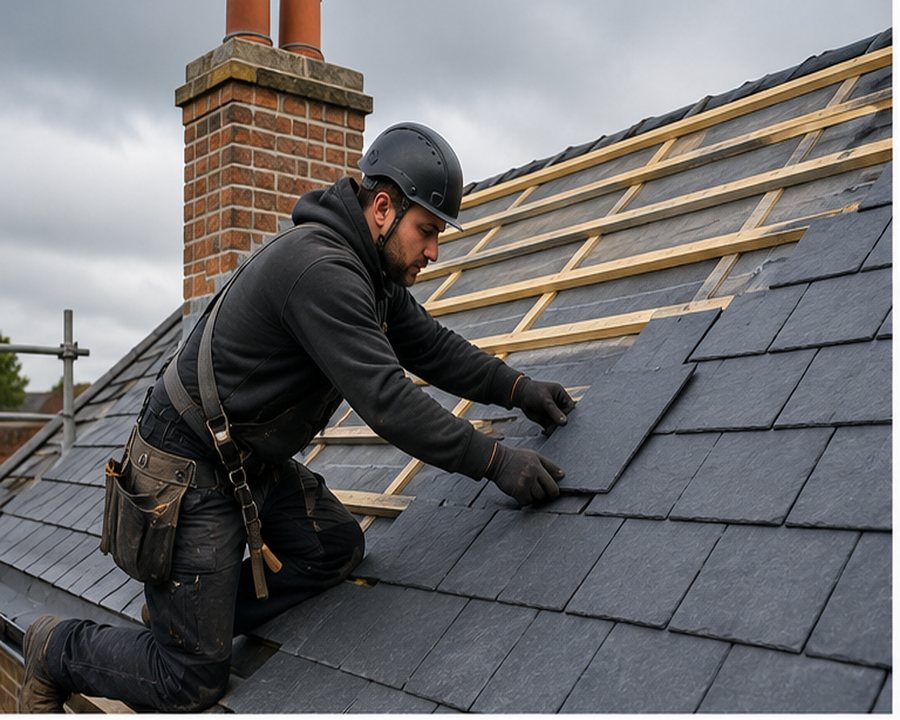
The price depends on roof size and design, the existing covering, materials selected, access and the amount of work required. Contact Apex Roofing for a quotation.
Yes. Complete tiled roof replacement is included within the re-roofing service.
Yes. Slate roof replacement and new slate roofing are available for suitable projects.
The correct approach depends on the extent of the problem and overall roof condition. The roof should be assessed before deciding on the appropriate work.
Yes. Roof replacement can form part of a wider property renovation project.
Yes. Call 07377 461095 to discuss the project.
Usually not. A like-for-like re-roof does not materially affect the external appearance, so under section 55 of the Town and Country Planning Act 1990 it is not development at all. Changing to a visibly different material may be, and an Article 4 direction or a listed building changes the position — Halton Borough Council can confirm.
Yes. A complete re-roof renews a thermal element, which under regulation 23 of the Building Regulations 2010 triggers a duty to bring the roof up to current insulation standards — a U-value of 0.16 W/(m²K) for an existing dwelling. The work is either notified to building control or self-certified by a roofer registered with a competent person scheme.
Apex Roofing covers Cheshire and the surrounding area for complete roof replacement, new slate and tiled roofs and re-roofing.
Apex Roofing Cheshire · 105 Fence House, Fence Avenue, Macclesfield SK10 1LM
Tell us about the property and the roof, and we will come back to you — usually the same day.
Prefer to talk? Call 07377 461095 · WhatsApp +44 7465 861265 · Email apexroofing14@gmail.com