
For customers in Stretford, roof replacement can be particularly relevant for upgrading an established property's roof where deterioration is spread across multiple areas.
Apex Roofing provides professional roof replacement in Stretford, including complete re-roofing, new slate roofs and new tiled roofs for homeowners and property owners.
For customers in Stretford, roof replacement can be particularly relevant for upgrading an established property's roof where deterioration is spread across multiple areas.
Stretford has dense terraced and semi-detached housing from the late Victorian and inter-war periods, and the right specification follows from the roof rather than from a price list. If you are unsure whether the existing roof needs further repair or complete replacement, the first step is to assess it and establish the extent of the work.
On a terrace or semi, a re-roof is often best planned with the neighbours in mind — shared party lines and abutting slopes make the boundary detail one of the more important parts of the job, and one of the easiest to get wrong.
Tile is the commonest covering across Stretford's terraces and semis. Where a roof is one of a matching run, keeping the profile and colour close to the neighbours is worth doing deliberately.
A good proportion of Stretford's older terraces were originally slated. Where that is the case, slate for slate keeps the weight the structure was built for and keeps the roof reading correctly within the run.
A single defect is a repair. Defects appearing across the roof, or repairs that keep being needed somewhere new, suggest a covering that has reached the end of its service life.
Repair is appropriate where the rest of the covering is performing. Where it is not, the run of repairs tends to cost more over five years than the re-roof would have, without ever solving the problem.
Apex Roofing can assess the individual property and quote for the work actually required, rather than treating every roof as the same job.
Most people assume a new roof needs planning permission. Usually it does not — and the reason is more solid than “permitted development”. Under section 55 of the Town and Country Planning Act 1990, work that does not materially affect the external appearance of a building is not development at all. A like-for-like re-roof therefore falls outside the planning system rather than relying on rights that can be withdrawn.
Changing the look of the roof is the case to be careful with. Going from slate to tile, or to a markedly different colour or profile, can materially affect the external appearance — and if it does, it is development. The time to check with Trafford Council is at specification stage, not once the pallets have arrived.
There is a common misunderstanding worth clearing up: being in a conservation area does not automatically mean you need permission to re-roof. Conservation area status alone does not withdraw roof rights. An Article 4 direction does. Trafford Council makes Article 4 directions in two categories, one of which covers development affecting areas and buildings of historic interest — so whether roof rights are withdrawn on a particular Stretford street depends on which direction, if any, applies there. Whether one covers a particular street is a question for Trafford Council, and it is one free phone call before you commit to anything.
Listed buildings are different again, and seriously so. Under section 7 of the Planning (Listed Buildings and Conservation Areas) Act 1990, alterations affecting the character of a listed building need listed building consent — and re-roofing affects character in all but the most trivial cases. That sits separately from planning permission and from building regulations, and proceeding without it is a criminal offence rather than an oversight. Trafford Council handles the applications.
Building regulations are the part that catches people out, because a re-roof is notifiable work and a good many quotations never mention it. Under regulation 23 of the Building Regulations 2010, renewing a thermal element triggers a duty to bring it up to current insulation standards. A complete re-roof renews the whole element, so the duty applies.
What that means in practice is a target U-value of 0.16 W/(m²K) for the renovated roof, set by Approved Document L Volume 1 for existing dwellings. Insulation is therefore part of the specification, and a quotation that says nothing about it is an incomplete quotation.
The guidance is not inflexible about it. Where the full standard would cost usable head room, a lesser one is acceptable so long as the insulation fills the rafters and gets as close as it practically can. And where the upgrade would take more than fifteen years to pay back, the duty drops to the best value that clears that test — while never leaving the roof worse than it was.
The paperwork is worth insisting on. A re-roof is signed off either through building control or by a roofer registered with a competent person scheme such as CompetentRoofer or NAPIT. Whichever route, you should end up with a certificate — and you will want it in the file when you come to sell.
Heritage buildings are treated differently but not exempted. Approved Document L allows listed buildings, those in conservation areas and scheduled monuments to fall short of full compliance where meeting it would unacceptably alter character or appearance — and expects compliance where it would not. There is also a specific warning about trapping moisture in vapour-permeable construction. Trafford Council is where that judgement is made.
Slate and tile can both provide an attractive pitched-roof finish. The right choice depends on the existing property, roof design, desired appearance and project requirements — and on what the roof structure was built to carry. Both sit within the same roof replacement service.
Read the full slate vs tile comparison →
A complete new roof can form an important part of renovating an older property. Replacing an ageing covering alongside other exterior work also transforms the appearance of the building — and it is far easier done before scaffolding comes down than after.
Five guides written for Stretford homeowners on what a new roof costs and how to decide what you actually need.
Slate and tiled roof replacement carried out by Apex Roofing across Cheshire.
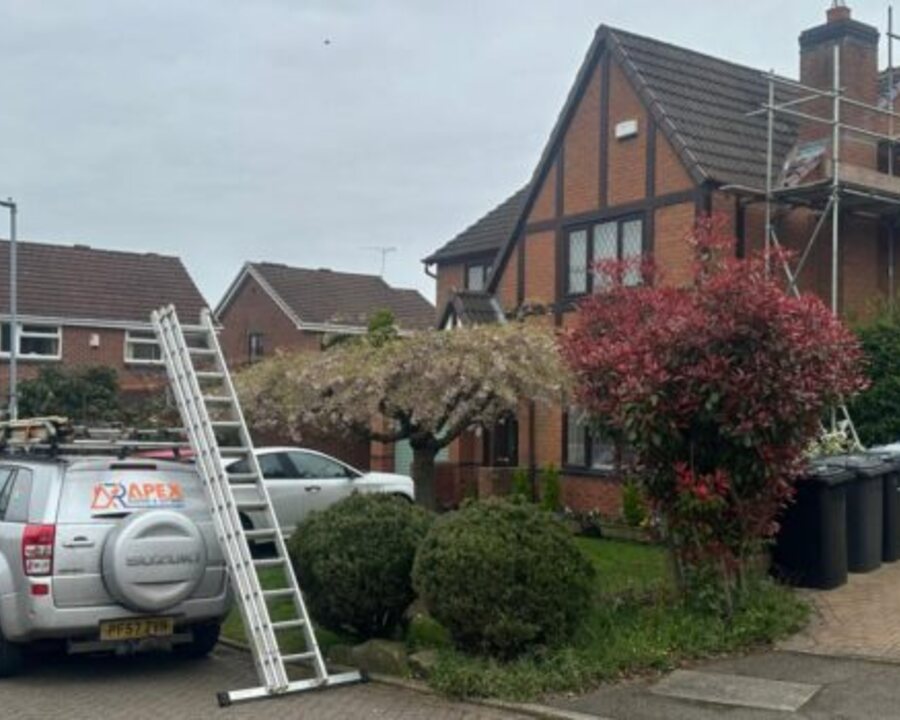
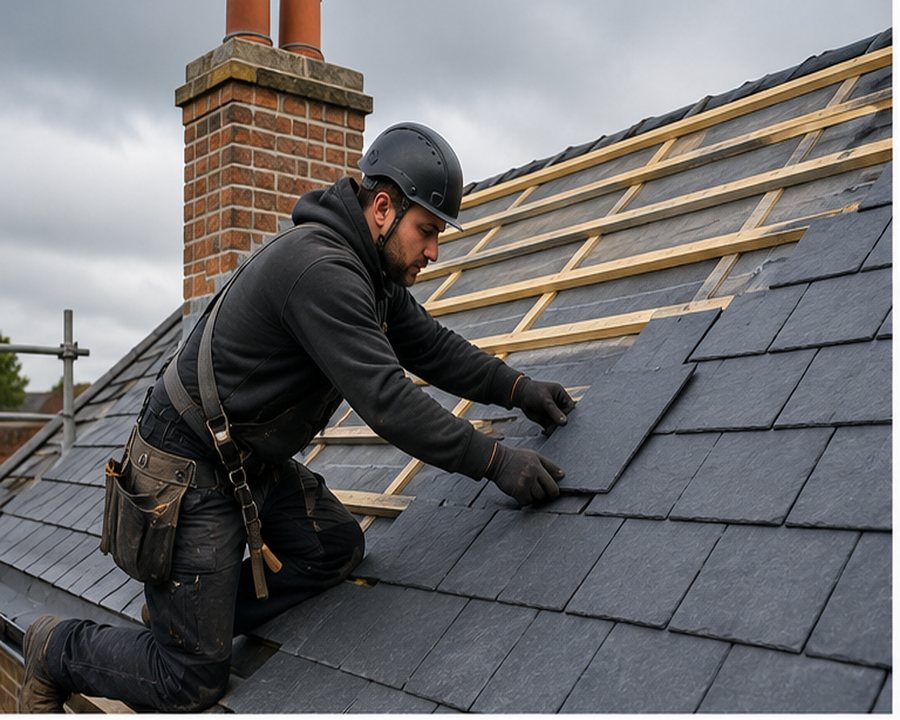
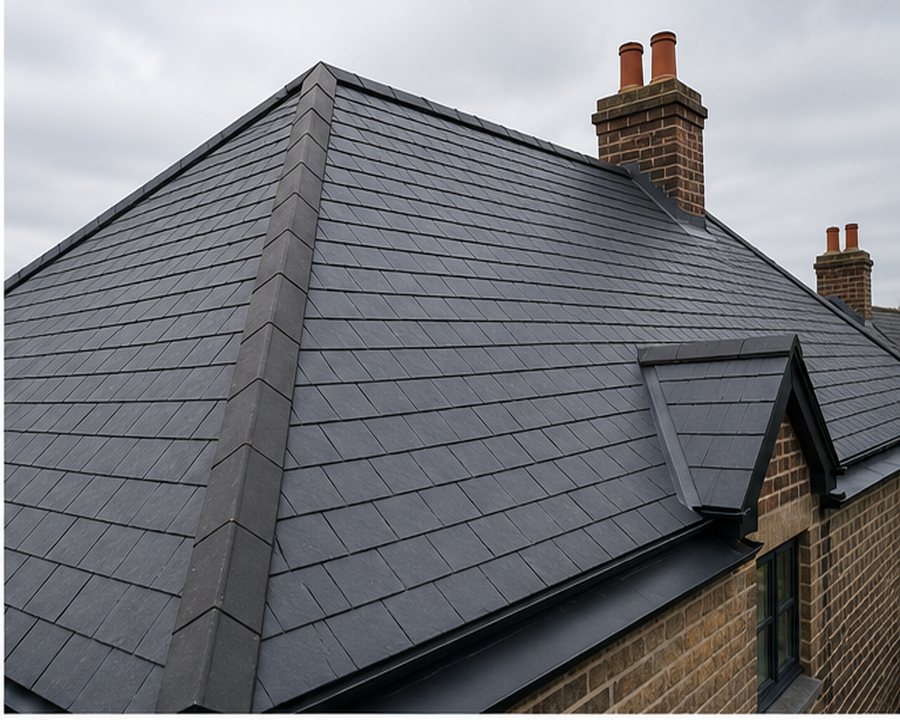
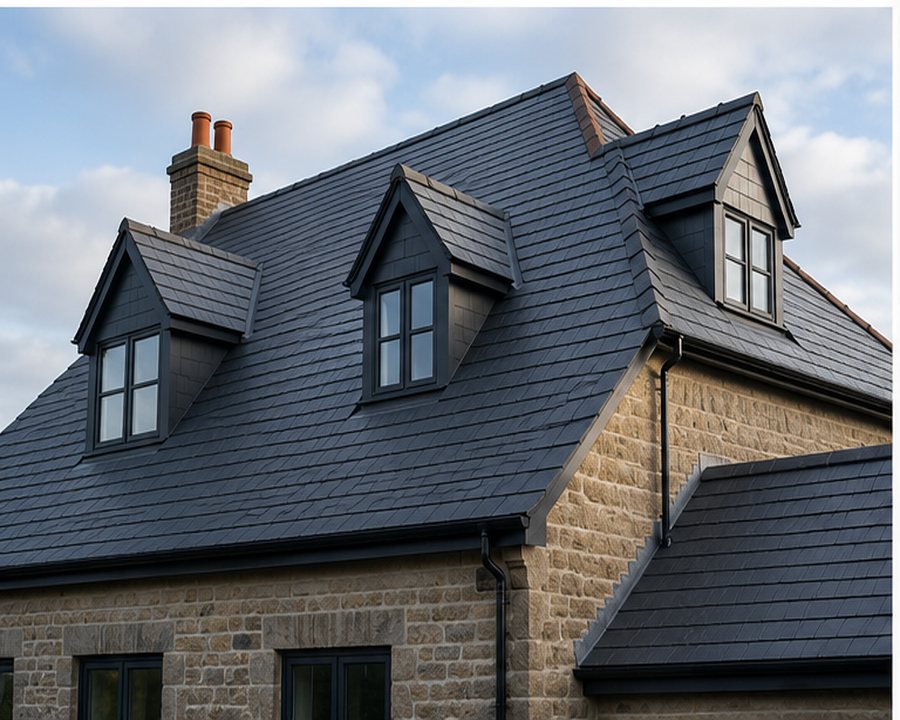
The price depends on roof size and design, the existing covering, materials selected, access and the amount of work required. Contact Apex Roofing for a quotation.
Yes. Complete tiled roof replacement is included within the re-roofing service.
Yes. Slate roof replacement and new slate roofing are available for suitable projects.
The correct approach depends on the extent of the problem and overall roof condition. The roof should be assessed before deciding on the appropriate work.
Yes. Roof replacement can form part of a wider property renovation project.
Yes. Call 07377 461095 to discuss the project.
Usually not. A like-for-like re-roof does not materially affect the external appearance, so under section 55 of the Town and Country Planning Act 1990 it is not development at all. Changing to a visibly different material may be, and an Article 4 direction or a listed building changes the position — Trafford Council can confirm.
Yes. A complete re-roof renews a thermal element, which under regulation 23 of the Building Regulations 2010 triggers a duty to bring the roof up to current insulation standards — a U-value of 0.16 W/(m²K) for an existing dwelling. The work is either notified to building control or self-certified by a roofer registered with a competent person scheme.
Apex Roofing covers Cheshire and the surrounding area for complete roof replacement, new slate and tiled roofs and re-roofing.
Apex Roofing Cheshire · 105 Fence House, Fence Avenue, Macclesfield SK10 1LM
Tell us about the property and the roof, and we will come back to you — usually the same day.
Prefer to talk? Call 07377 461095 · WhatsApp +44 7465 861265 · Email apexroofing14@gmail.com