The ridge and hip tiles on a Warrington bungalow were lifted off, the perished mortar underneath cleared away, and each tile reset on a fresh bed along the length of the roof.
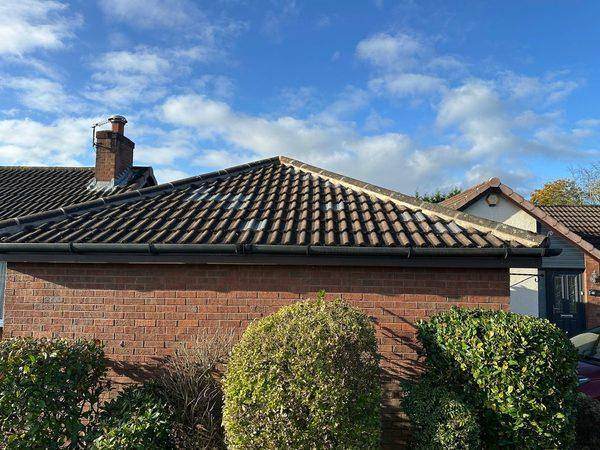
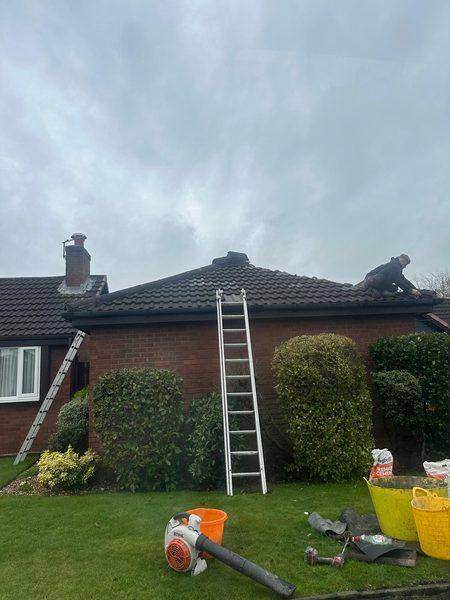
This bungalow in Warrington had a dark concrete tiled roof in reasonable order, but the mortar holding the ridge and hip tiles down had had enough. Moss had taken hold along the bed line, the joints between tiles had opened, and once mortar reaches that state the tiles above it start to move in the wind whether or not they look loose from the garden.
Re-bedding is not the same job as repointing. Repointing only replaces the outer face of the mortar and leaves whatever is behind it in place; re-bedding means taking the tiles off altogether, clearing the old bed down to the tiles beneath, and setting them back on new mortar. That is what this roof had, and it is one of the more common roof repairs we are called out for on a bungalow of this age.
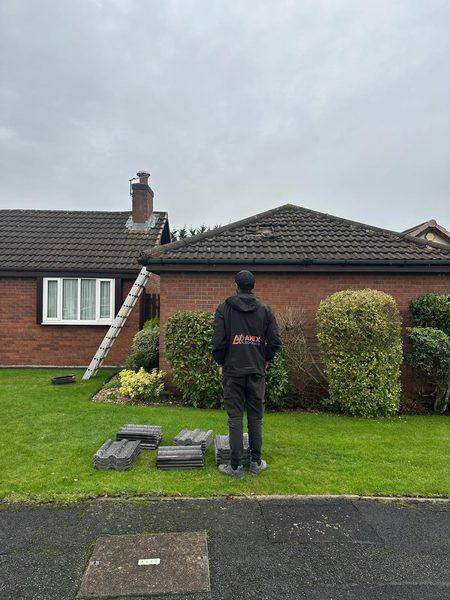
Each ridge and hip tile came off by hand and went down to the lawn, where they were set out in rows in the order they came from. One of the photographs shows the whole lot laid out on the grass in front of the house — it looks like a lot of tile for one ridge line, and it is the clearest measure of how much of this job happens off the roof.
With the tiles away, the old bedding was broken out and cleared. Moss, crumbled mortar and loose debris all came off the ridge line, and the tiles underneath were brushed and blown down so that the new mortar had something clean to sit on. The buckets and the blower in the photographs were doing exactly that.
The tiles then went back on a new bed, run along the hips and the main ridge, with each tile set to line and the joints between them filled as we went. A ridge is easy to get wrong here: bed each tile to whatever line the last one settled at and the whole run ends up wandering. We set the line first and worked the tiles to it.
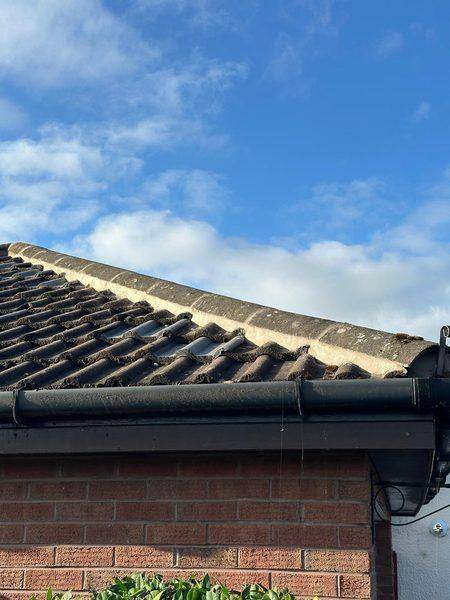
The close-up photograph shows the finished bedding — a solid pale mortar line running up the hip above the dark tiles, sitting tight against the tile edges, with the black half-round gutter and fascia below it left as it was. Nothing else on this roof needed touching.
The signs are worth knowing because they arrive long before a tile comes off. Gaps or cracks opening along the ridge; a tile that rocks when it is pushed; damp showing at the top of the loft; bits of mortar turning up in the gutters or on the path; a rattle along the ridge in strong wind. Any of those is worth a look from a ladder.
We take on this work as part of roof repairs in Warrington and the towns around it. If your ridge line has started shedding mortar, send us a message and we will come and tell you whether it needs pointing or lifting properly.
Tell us what the roof is doing and roughly where you are. We will come and look, and you get a written price before anything starts.