Water had been coming through a kitchen ceiling in Sale for some time. The hipped roof over it was stripped to the bare rafters, the timbers looked over, and the whole thing re-covered on new underlay and battens.
The call was about a kitchen ceiling that kept getting wet. Leaks that come back after every spell of rain are rarely one thing gone wrong; they are usually several small failures lining up, and this roof in Sale had four of them.
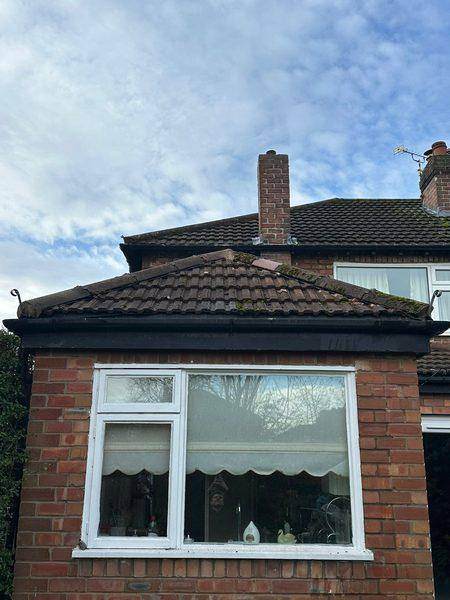
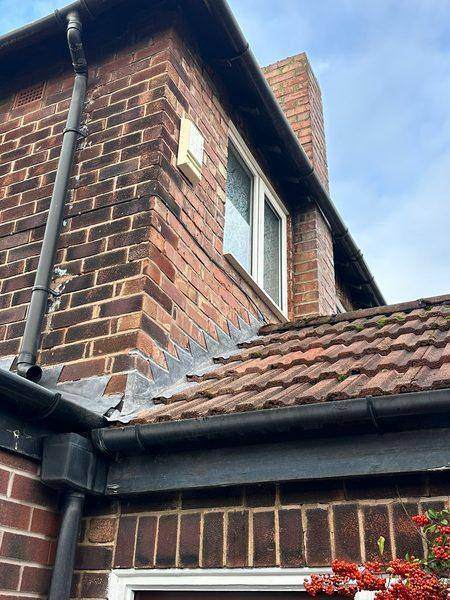
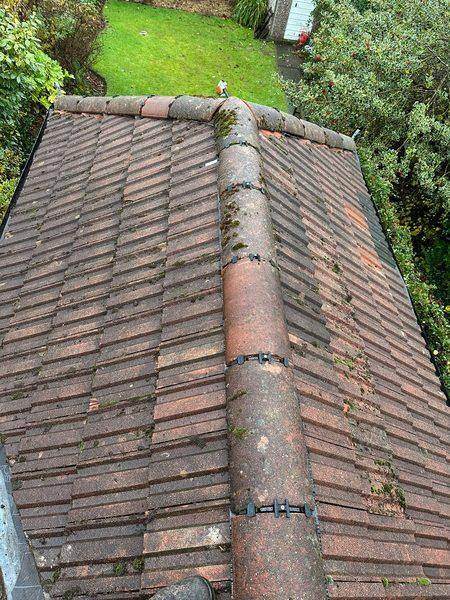
The kitchen sits under a hipped roof at the back of the house, tucked against the two-storey wall, with the covering carried up to a lead flashing at the brickwork. The first photographs were taken from the ground and from the top of a ladder before anything was touched: moss across the whole slope, tiles out of line, weathered bedding along the ridge, and lead at the wall that had stopped doing its job.
Underneath the moss, the covering was worn through in more than one sense. Tiles had cracked and slipped, so water was getting past them freely, and the felt below had torn and gone hard with age — once that happens there is nothing left to catch what comes through and carry it to the gutter. The mortar along the ridge had weathered back to a weak, open joint.
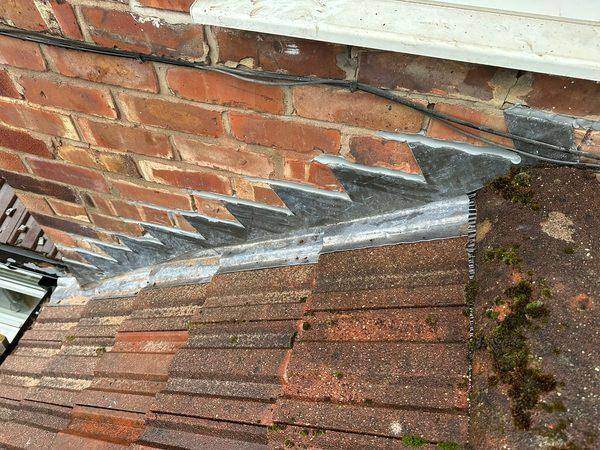
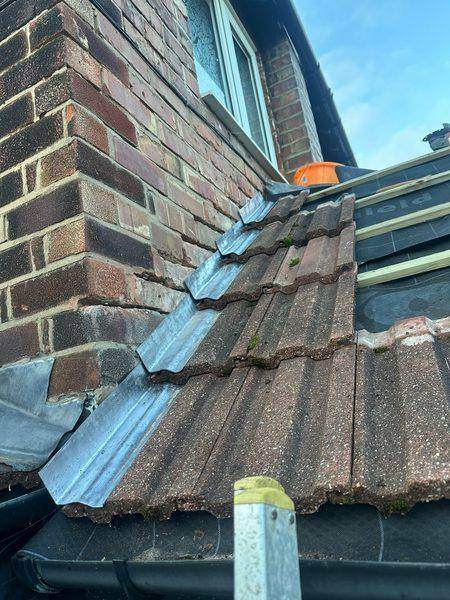
The lead flashing at the wall was the fourth part of it. Where a low roof runs into a brick elevation the lead has to be worked into the joints and dressed over the tiles, and this one had lost its seal. The close-up photograph of the old stepped lead against the red brick shows how open the line had become, with moss growing right up to it.
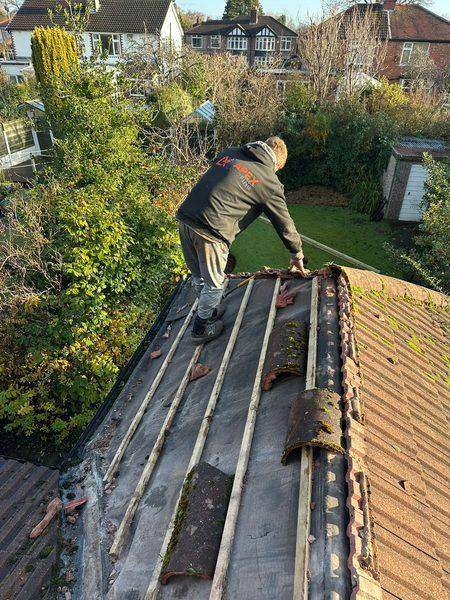
There was no half measure worth doing here, so the covering came off completely. One of our lads is photographed part way through lifting the old tiles, with the torn felt and the battens showing behind him. Tiles, felt and battens all came off and were cleared down.
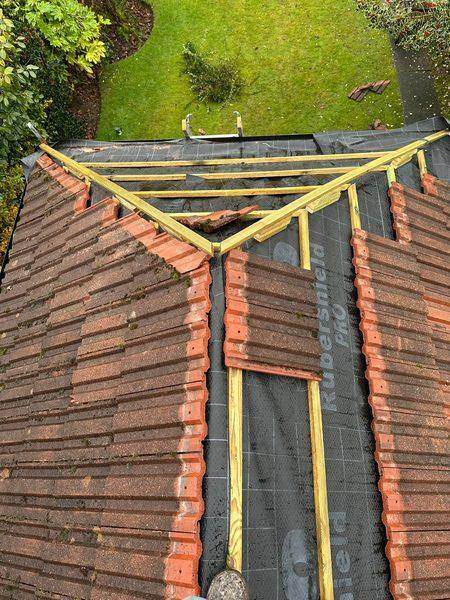
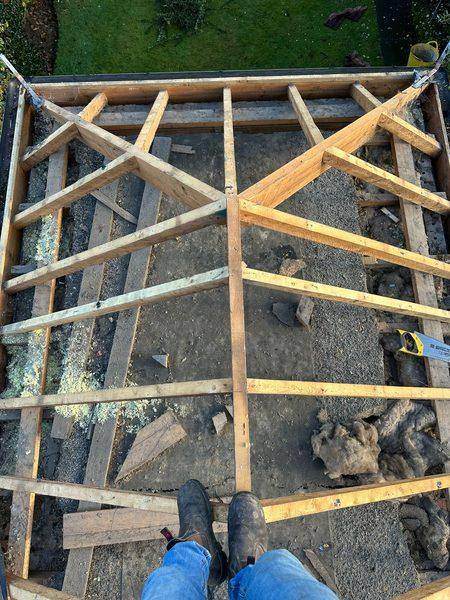
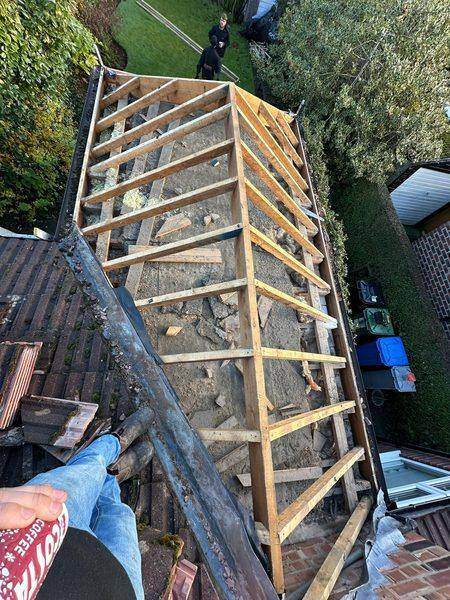
The two photographs looking straight down into the bare structure are the ones worth studying. That is the roof stripped to its rafters and hip rafters, with the muck of decades — old mortar, broken tile, dust and bits of debris — lying on the ceiling below. All of it was cleared out and every timber was gone over for rot before anything went back on. If there is soft wood in a roof, this is the only moment you will ever get to see it.
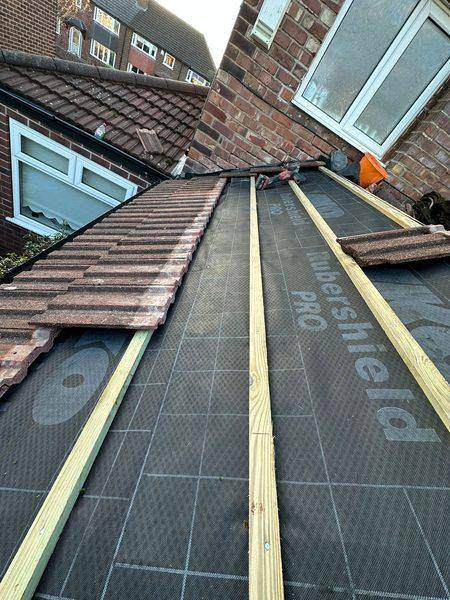
A breathable underlay went down over the rafters, run out in courses up the slope so each one laps the one below. Treated battens were fixed over it and lined up across the hips, which is fiddly on a hipped roof because every course has to meet the hip at the right point on both sides or the tile courses will not line through. In the photographs you can see the fresh timber running up to the hip rafters while the old red tiles were still on the verges.
The roof was then recovered and the lead at the wall renewed, cut to step down with the brickwork and dressed over the tiles so water is thrown back out onto the slope. The finished flashing is in one of the later photographs, bright against the brick.
This is fairly typical of the roof repair work we do around Sale, Altrincham and Stretford — a job that starts as a damp patch on a ceiling and turns out to be a covering that has come to the end. There is a slate roof in Prestbury here that went much the same way. If a ceiling in your house keeps getting wet, send us the details and we will come and have a proper look for you.
Tell us what the roof is doing and roughly where you are. We will come and look, and you get a written price before anything starts.