Three pieces of work on one Blackpool roof: failing mortar raked out and replaced along the ridge and hips, the lead round the chimney made good, and both pots lifted and re-bedded in fresh mortar.
This Blackpool house needed three things doing at once, which is common enough on a roof that has had a few decades of coastal weather on it. The mortar along the ridge and hip lines had failed, the lead where the chimney comes through was no longer holding, and the pots on the stack were sitting in bedding that had broken up around them.
None of those is unusual on its own. Together they add up to a roof with several open routes for wind and water, and dealing with them in one visit makes far more sense than coming back three times. Our photographs follow the work from the first look over the tiles to the finished ridge line.
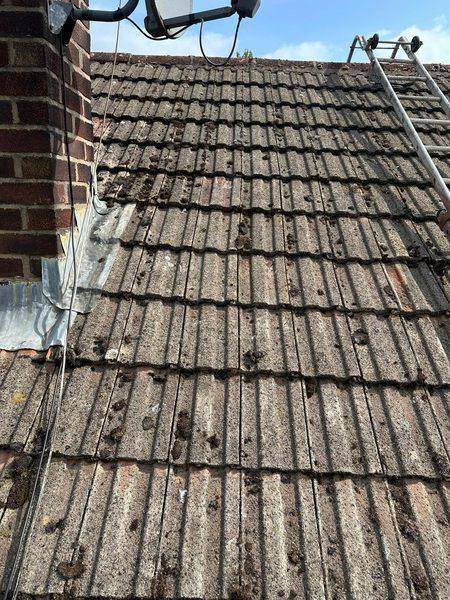
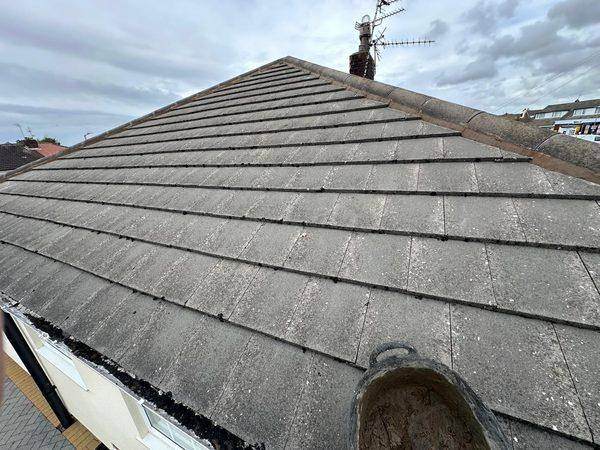
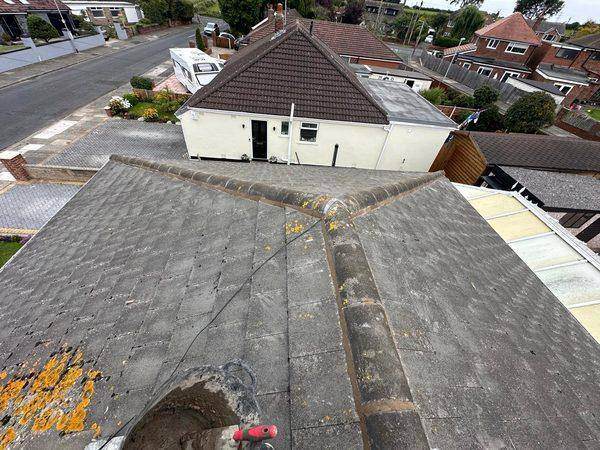
The covering is old interlocking concrete tile, carrying a heavy growth of moss across the slope and a good deal of lichen on the flatter sections. Moss on its own is untidy rather than dangerous, but it holds water against the tile and drops into the gutters, and it makes it harder to see what is actually going on underneath.
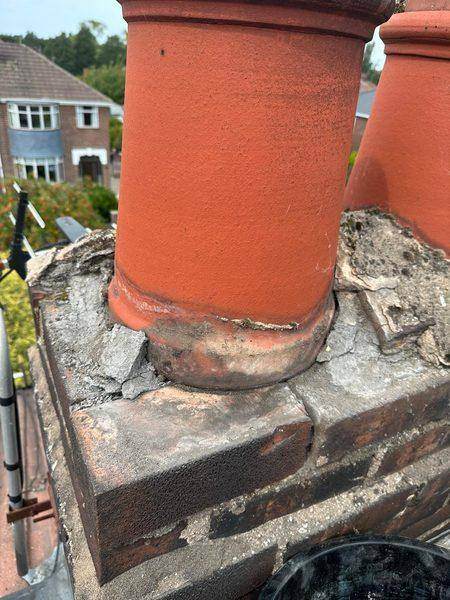
At the chimney, the old flashing at the abutment had been patched more than once and was standing away from the brickwork in places. Up at the crown, the bedding around both terracotta pots had cracked and was coming off in pieces, leaving the pots loose on the stack. The mortar along the ridge and down the hips had gone the same way, crumbling back and leaving gaps under the tiles.
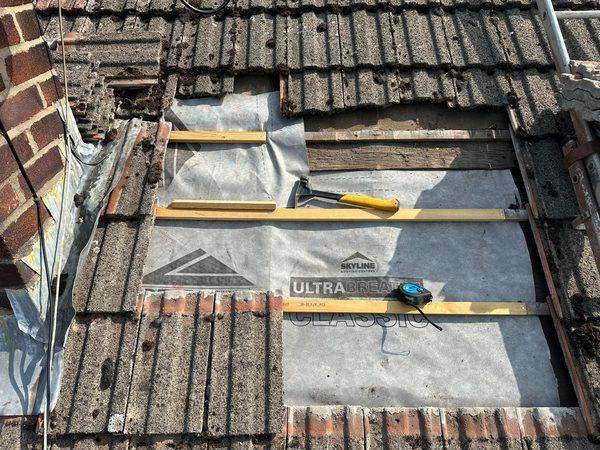
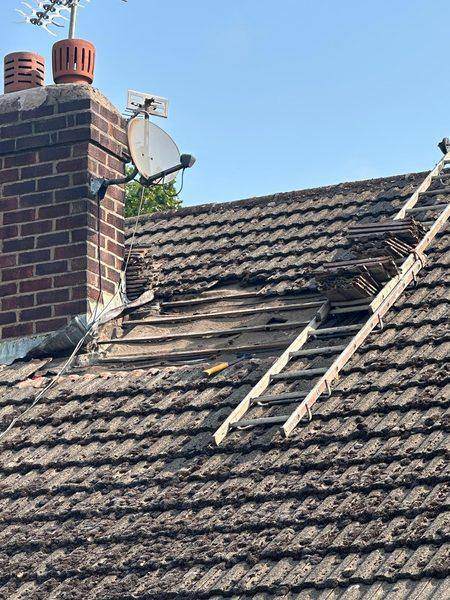
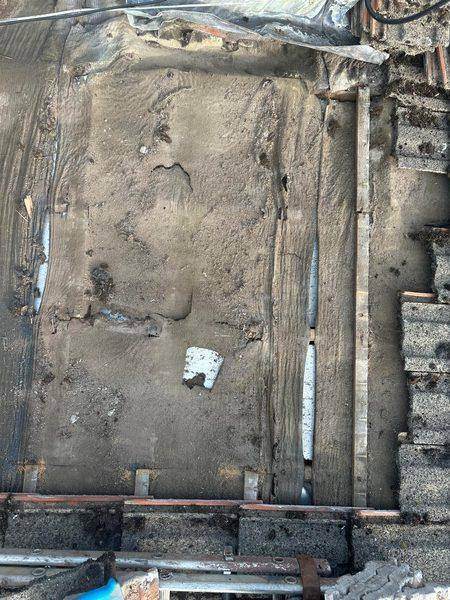
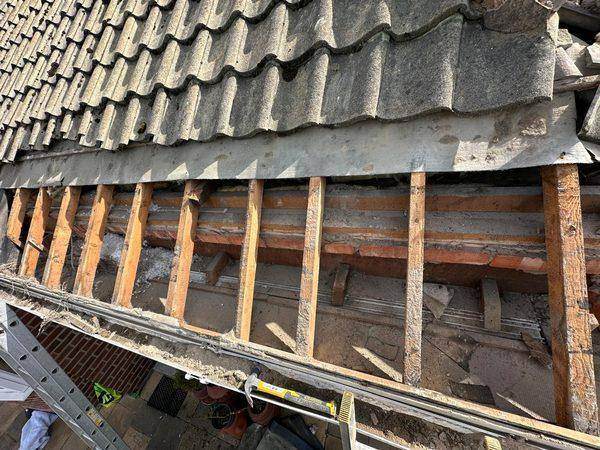
Tiles were lifted back where we needed to get underneath, and the bottom courses came off in one section so the rafters and old battens could be seen. Where the material behind the tiles had perished, fresh breathable membrane and new timber battens went in before anything was laid back — one photograph shows a new sheet of membrane and pale new battens in place, with the ripper and tape still lying on it.
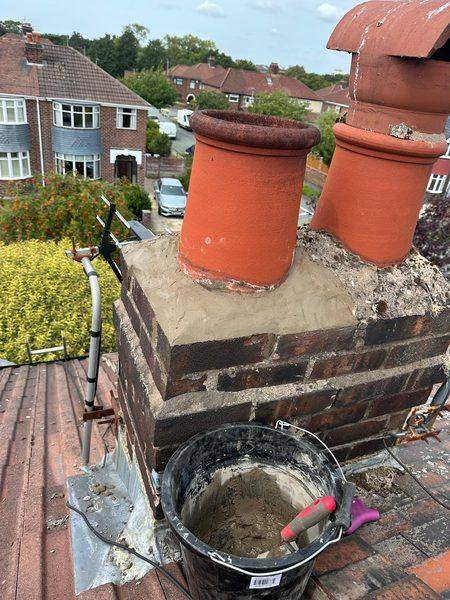
The pots were taken off the stack, the broken bedding cleaned away, and both re-bedded in fresh mortar and finished off neatly around the base. The lead round the chimney was repaired and re-secured so it sits tight to the brick and sheds water back onto the tile rather than behind it.
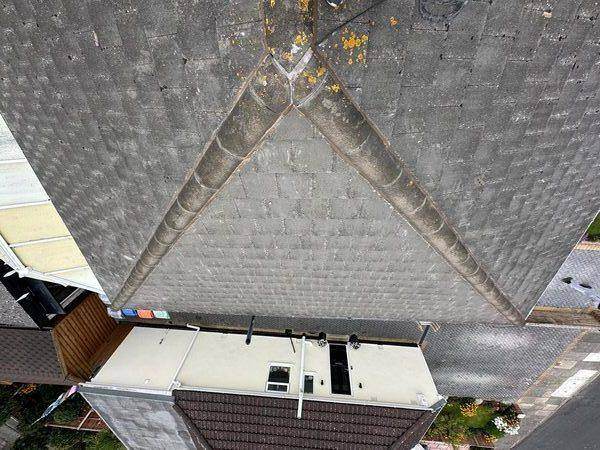
Along the ridge and the hips, the failing mortar was raked out and replaced with fresh durable mortar, tile by tile. The later photographs show the result from both ends of the roof: clean, continuous lines along the ridge and down each hip, with the bucket still standing on the slope. A similar ridge job inland is on our ridge tile re-bedding in Warrington page.
The ridge and the stack are the two highest points on a roof and they take the worst of the wind. Mortar up there is exposed on both faces, so it dries out, cracks and lets go long before the tiles below it do. Once a ridge tile can rock, wind gets under the line and starts lifting at the tiles either side of it.
A chimney adds a second weak point a few feet away, where lead, brick and tile all have to meet and move at different rates. If you are seeing mortar debris in the gutters, a pot that looks off plumb, or damp near the chimney breast after heavy weather, both are worth checking at the same time. Our roof repairs page sets out what we cover, and you can send photographs through the enquiry form for a free quote.
Tell us what the roof is doing and roughly where you are. We will come and look, and you get a written price before anything starts.