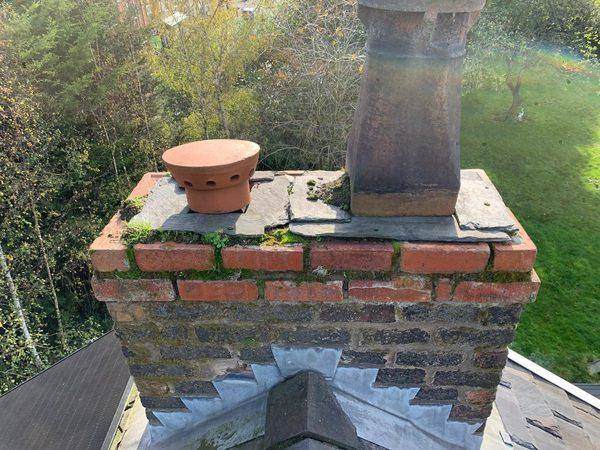
Ridge repointing, chimney leadwork and re-bedded pots in Blackpool
Ridge and hip repointing, chimney leadwork made good and both pots re-bedded on a Blackpool house. Photographs of each stage of the work.
A cowl sits on top of a chimney pot to keep out rain, birds and debris, or to improve how a flue draws. The right one depends on how the chimney is used.
An open chimney pot lets in rain, leaves, birds and sometimes nests. Rain running down an unused flue can cause damp in the chimney breast, and blockages can be a hazard if the flue is ever lit. A cowl is a cap or cover fitted over the pot to address one or more of those problems.
Cowls are also used to reduce downdraught, where wind forces smoke back down the flue.
Which is suitable depends on the type of fuel and appliance, if any, as well as on the pot and stack.
For a flue in regular use, the cowl must not restrict the escape of combustion gases. For gas appliances and solid-fuel stoves, specific types are normally needed, and the appliance installer or manufacturer's advice should be followed.
For a flue that is no longer used, a vented cap is often chosen. Sealing the top completely can trap moisture in the flue and encourage damp, so some ventilation is usually kept. Whether that suits your property depends on the situation, and it is worth asking.
The pot and flaunching are inspected first, because a cowl cannot be fixed securely to a loose or cracked pot. Where needed, the pot is re-bedded or replaced. The cowl is then fitted by clamp, strap or pot-top fixing designed for the pot's size and shape, and checked for stability.
Cowls should be checked occasionally, since wind and weather can loosen them, and mesh can clog with debris and soot. A cowl on a working flue will need cleaning when the chimney is swept.
Consider the look as well as the function. On a period house, a plain clay or terracotta pot may suit the street better than a bright metal cowl, and some cowls are designed to blend in. If appearance matters to you, say so when you ask for a quotation, so the options can be discussed fairly.
If you are considering a cowl, Apex Roofing offers a free inspection and free quotation. Call to talk through what suits your chimney.
Call or message Apex Roofing for a free quotation.
Not necessarily, but cowls are useful for keeping out rain and birds or reducing downdraught. Whether you need one depends on the flue, how it is used and the state of the pot.
Possibly, but the cowl must suit the appliance and not restrict the flue. Ask the installer or manufacturer and tell the roofer how the flue is used.
Fully sealing can trap moisture. A vented cap is often used to keep rain out while allowing air flow. The best option depends on the property.
Real jobs photographed by Apex Roofing.
Ridge and hip repointing, chimney leadwork made good and both pots re-bedded on a Blackpool house. Photographs of each stage of the work.
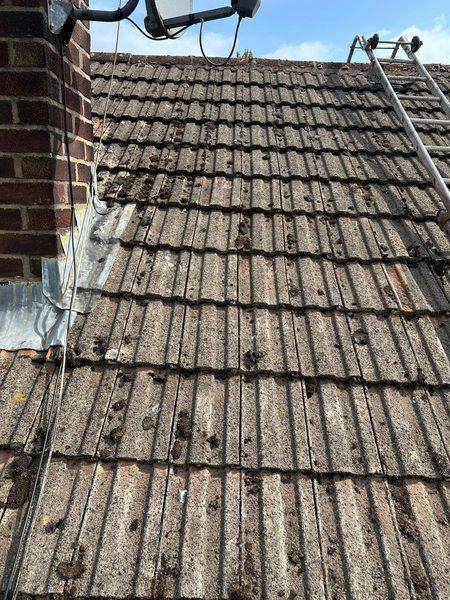
Mossy mortar raked out of a stone-slated roof in Warrington. The chimney cow was re-bedded and the flaunching renewed, then the whole ridge line was re-pointed.
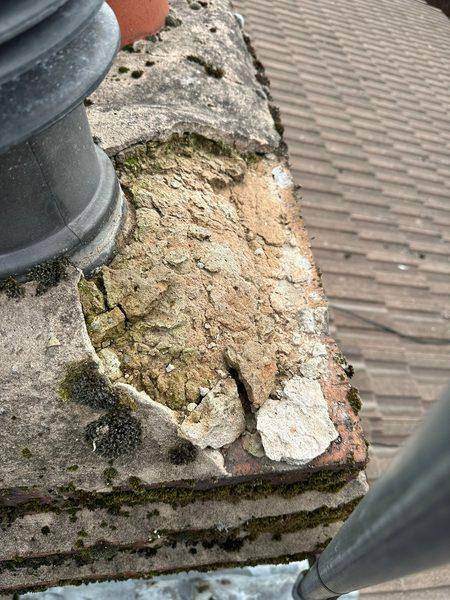
A Warrington chimney crown re-flaunched after the old fillet crumbled away and left the flue terminal unsupported. Photographs of the work.
Apex Roofing covers Cheshire and the surrounding area. Choose your town for local information.
Apex Roofing Cheshire · 5 Weybridge Close, Warrington WA4 5LZ
Tell us about the property and what you have noticed and we will come back to you.
Prefer to talk? Call 07377 461095 · WhatsApp +44 7465 861265 · Email apexroofing14@gmail.com