Re-covering and re-sealing a curved bay roof in Altrincham
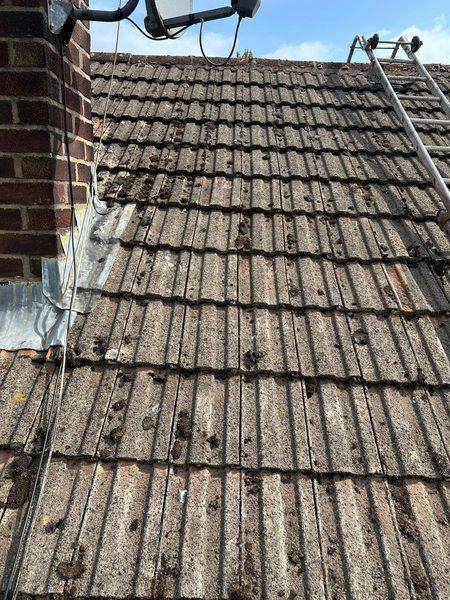
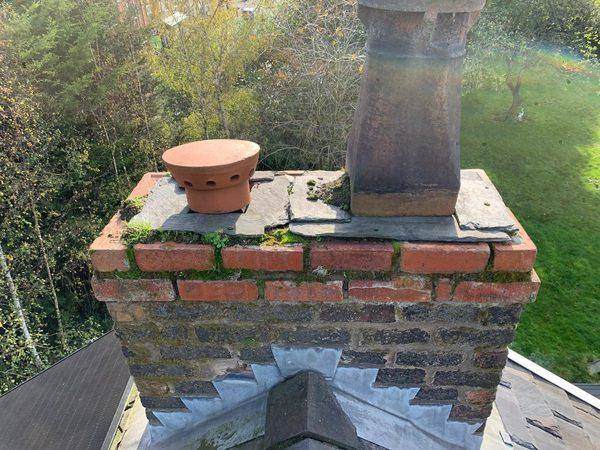
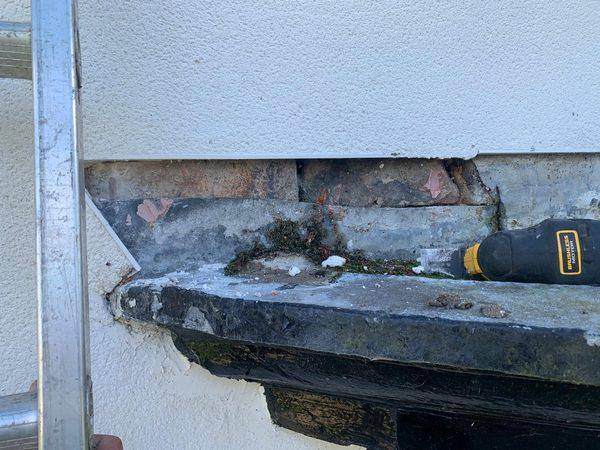
A curved bay window roof in Altrincham stripped back, re-covered and re-sealed at the wall junction after weather damage. Photographs included.
The ridge sits at the highest, most exposed point of your roof. When the mortar beneath it cracks or the tiles lift, wind-driven rain can get in. Ridge tile repairs put that right.
Ridge tiles run along the top of the roof where two slopes meet, with hip tiles doing the same job along any sloping corner. They close the gap between the two sides and shed water away from it. Traditionally they are bedded on mortar, which also holds them in place.
Because they are the highest point, they take the worst of the wind, and the mortar is exposed to frost, rain and sun all year.
A ridge that looks slightly rough from the ground may be fine, but a visibly wavy line or missing mortar is worth checking.
Where the tiles are sound but the mortar has failed, the work usually starts with lifting the ridge tiles and clearing out the old bedding. The tiles are then reset on fresh mortar, lined up and pointed so the joints shed water. The result is a straight ridge fixed firmly to the roof.
Pointing alone, where new mortar is applied over old, can be a short-term measure if the bedding underneath is loose. Which is right depends on what lies beneath, and a roofer should look before suggesting it.
Cracked or damaged ridge tiles are replaced. As with other tiles, matching the profile and colour is part of the job.
A dry ridge uses mechanical fixings, a ventilated ridge strip and tile clips rather than relying on mortar. It avoids the cracking that mortar suffers and can allow some ventilation along the ridge. Dry ridge suits many roofs, though not every profile, and it is worth discussing the pros and cons for your property.
If the ridge is failing because the roof beneath it is moving, or the rafters and battens near the top are rotten, redoing the mortar will not last. The same is true where tiles along the ridge line are themselves flaking or porous.
Ridge work is also a good moment to check the rest of the top of the roof. The verges, the tiles just below the ridge and any ventilation fitted at the apex can all be looked at while access is in place. Catching a loose verge or a worn end tile now is usually simpler than coming back for it after the next gale.
If your ridge line looks tired, Apex Roofing offers a free inspection and free quotation. Call to discuss what your roof needs.
Call or message Apex Roofing for a free quotation.
Look for cracked mortar, visible gaps, uneven lines or tiles that appear to tilt. Mortar debris in the gutter is another clue. A roofer can check them safely close up.
Neither is better in every case. Dry ridge avoids mortar cracking and can suit many roofs, while traditional bedding is still widely used. It depends on the tile profile and the roof.
Yes. Hip tiles are bedded or fixed in a similar way, and they are usually inspected and repaired at the same time as the ridge.
Real jobs photographed by Apex Roofing.
A curved bay window roof in Altrincham stripped back, re-covered and re-sealed at the wall junction after weather damage. Photographs included.
Ridge and hip repointing, chimney leadwork made good and both pots re-bedded on a Blackpool house. Photographs of each stage of the work.
Mossy mortar raked out of a stone-slated roof in Warrington. The chimney cow was re-bedded and the flaunching renewed, then the whole ridge line was re-pointed.
Apex Roofing covers Cheshire and the surrounding area. Choose your town for local information.
Apex Roofing Cheshire · 5 Weybridge Close, Warrington WA4 5LZ
Tell us about the property and what you have noticed and we will come back to you.
Prefer to talk? Call 07377 461095 · WhatsApp +44 7465 861265 · Email apexroofing14@gmail.com