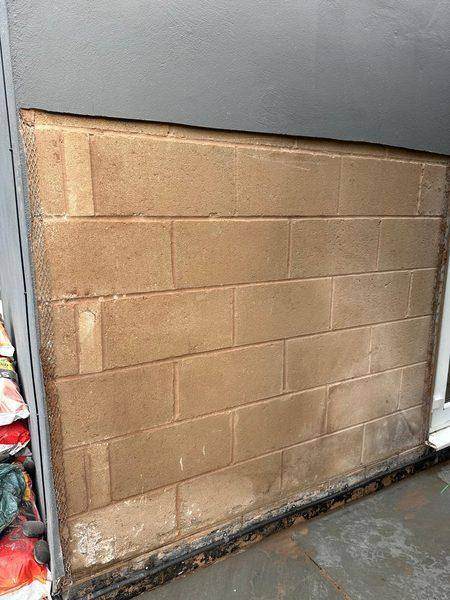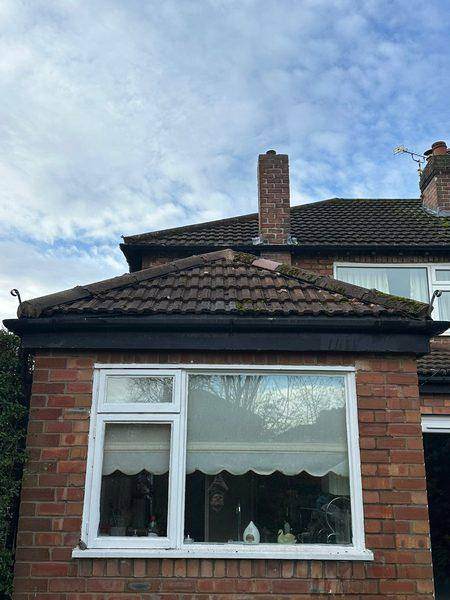
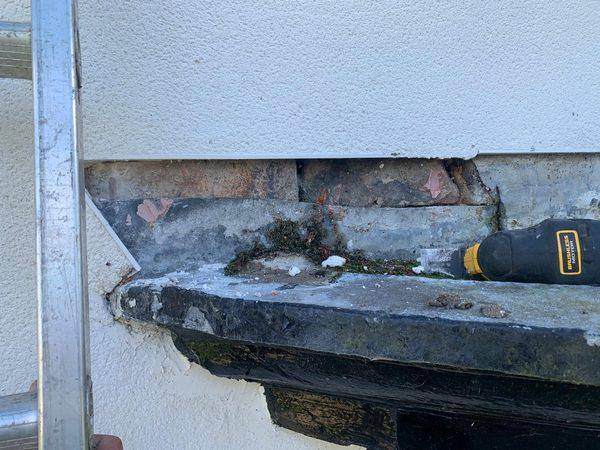
Re-covering and re-sealing a curved bay roof in Altrincham
A curved bay window roof in Altrincham stripped back, re-covered and re-sealed at the wall junction after weather damage. Photographs included.
A dormer adds several awkward junctions to a roof. Lead at the cheeks, the roof edge and the base of the box is where leaks most often start, and where repairs need care.
A dormer window sits in a box that projects from the main roof slope. That creates a number of junctions where different surfaces meet: the sides of the box, called cheeks, the small roof on top, and the point where the dormer rises out of the main slope.
Each of these junctions needs weatherproofing, and lead is the traditional material because it can be shaped to the angle. When any one of them fails, water can track into the dormer walls, the ceiling below or the insulation.
Damp patches on the angled ceiling or the dormer cheeks, stained plasterboard around the window, and bubbling paint are all common. Outside you may see lifted lead, lead that has slumped, or moss growing along the side of the box where water is sitting.
Dormers often have the lead hidden behind boarding or cladding, so a proper inspection may involve lifting or removing small areas to see what is behind them.
Access matters too. Dormer cheeks are often hard to reach, and scaffolding or roof ladders may be needed to work safely. A roofer who talks about how they will reach and support the work is usually one who has done it before.
It is also worth remembering that older dormers were sometimes built by different people at different times. You may find patches of old felt, mastic and mismatched metals all stacked on top of each other, and untangling that is part of the job.
The age of the dormer, how it is clad, whether the roof on top is pitched or flat, and the roof covering all affect the detail. Some dormers were built without proper trays or upstands, and getting those right may mean more than a like-for-like repair.
If the dormer cheeks are rotten, the cladding is failing or the dormer roof covering has reached the end of its life, flashing repairs are only part of the answer. In that case we will say so and explain what else needs doing.
Ask what they have found behind the cladding, which junctions are being renewed and what is being done about any damaged timber. Dormer work should be explained clearly with photographs.
If water is getting in around your dormer, we can inspect it free of charge and provide a free quotation.
Call or message Apex Roofing for a free quotation.
Dormers have many more junctions than a plain slope. A failed cheek flashing or a poorly sealed window frame can let water in while the main roof stays dry.
If the surrounding lead is sound, local repairs are possible. Where lead has failed widely or was installed badly, replacing the complete run gives a better result.
Often some of it has to be lifted so the flashing can be tucked in properly. It can usually be refitted or replaced as needed.
Real jobs photographed by Apex Roofing.
A curved bay window roof in Altrincham stripped back, re-covered and re-sealed at the wall junction after weather damage. Photographs included.
Damp near a chimney breast in Warrington traced to the stack. Joints repointed, new Code 4 lead fitted, the crown repaired and a water test run afterwards.
A leaking kitchen roof in Sale taken back to the rafters, re-covered on new breathable underlay and treated battens, with the lead at the wall renewed.
Apex Roofing covers Cheshire and the surrounding area. Choose your town for local information.
Apex Roofing Cheshire · 5 Weybridge Close, Warrington WA4 5LZ
Tell us about the property and what you have noticed and we will come back to you.
Prefer to talk? Call 07377 461095 · WhatsApp +44 7465 861265 · Email apexroofing14@gmail.com