Re-covering and re-sealing a curved bay roof in Altrincham
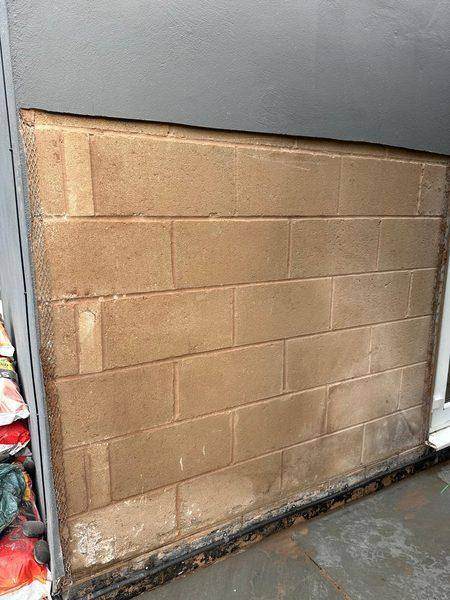
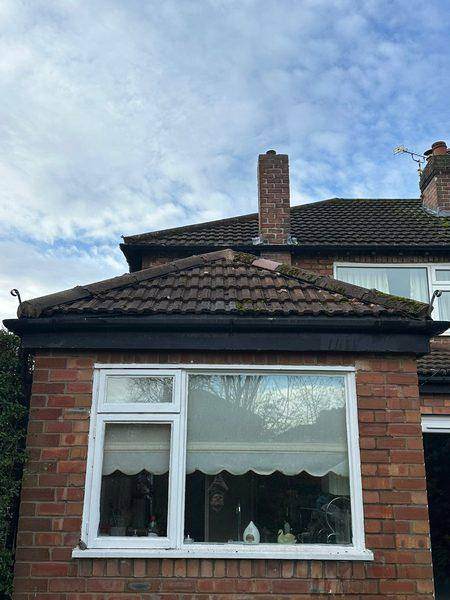
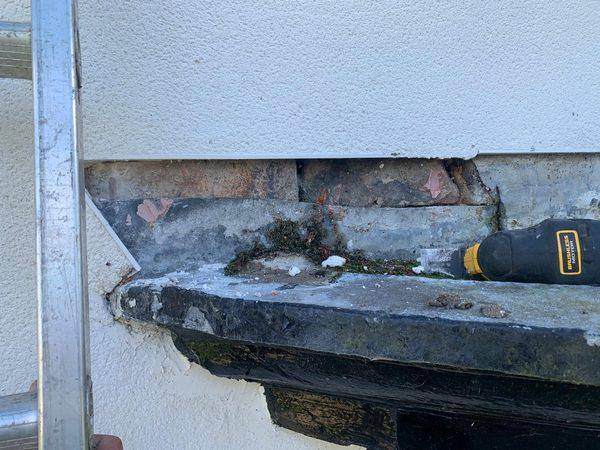
A curved bay window roof in Altrincham stripped back, re-covered and re-sealed at the wall junction after weather damage. Photographs included.
Sometimes lead is beyond patching. Here is how to tell when a roof needs its leadwork renewed in full, and what a proper replacement involves.
Lead can last a long time, often several decades, but it does not last forever. Poor installation, long sheets, movement in the building and ordinary wear all take their toll. At some point, repairing a split here and a lifted edge there stops making sense.
Replacement means stripping the old leadwork from a chimney, valley, wall junction or dormer and fitting new, detailed correctly for that position.
It can also be worth replacing where lead was installed incorrectly in the first place. For example, sheets that are too long or fixed without room to move will keep failing however often they are patched.
Doing it all in one go means the roof is weatherproofed consistently and any underlying faults are dealt with. It also means one set of work to be checked and signed off.
The extent of the work depends on how much leadwork the roof has, how high it is and how awkward it is to reach. Access, scaffolding and the roof covering around it all influence how the job is planned. We talk through each of these at the survey.
Weather and safety also shape the plan. Lead work is done at height, so scaffolding or edge protection may be needed, and the roof has to be left watertight at the end of each working session. That is normal practice and worth asking about.
If the property is listed or in a conservation area, the choice of materials and the method may be restricted. A quick check with the council before work starts avoids problems later.
If only one flashing has failed and the rest is sound, a local repair may be the right answer. The key is to match the work to the real condition, which is why an honest inspection comes first. Where the roof covering is also at the end of its life, combining lead renewal with wider work can make more sense than doing it in stages.
Ask any roofer which leadwork they plan to renew, what code they will use, whether they will check the boards beneath and how they will test the result. If you would like your leadwork assessed, we offer a free survey and a free quotation.
Call or message Apex Roofing for a free quotation.
Several cracks, slumped sheets, layers of sealant or damp that returns after repairs usually indicate that replacement is needed. An inspection will confirm what is practical.
Not necessarily. The code depends on the position and exposure of each piece. A roofer will recommend what is suitable for each junction.
Sometimes, where the surrounding covering is sound and can be lifted and re-laid. Often some tiles or slates need to be removed to reach and fix the new lead properly.
Real jobs photographed by Apex Roofing.
A curved bay window roof in Altrincham stripped back, re-covered and re-sealed at the wall junction after weather damage. Photographs included.
Damp near a chimney breast in Warrington traced to the stack. Joints repointed, new Code 4 lead fitted, the crown repaired and a water test run afterwards.
A leaking kitchen roof in Sale taken back to the rafters, re-covered on new breathable underlay and treated battens, with the lead at the wall renewed.
Apex Roofing covers Cheshire and the surrounding area. Choose your town for local information.
Apex Roofing Cheshire · 5 Weybridge Close, Warrington WA4 5LZ
Tell us about the property and what you have noticed and we will come back to you.
Prefer to talk? Call 07377 461095 · WhatsApp +44 7465 861265 · Email apexroofing14@gmail.com